UUM Today · 2026
A university news portal with a real newsroom behind it, and events that pay for themselves
A seven-module news portal for Universiti Utara Malaysia, with a four-role editorial workflow, live event coverage, and paid event registration that issues verifiable badges.

Context
Universiti Utara Malaysia publishes constantly — research announcements, campus stories, event coverage, video. UUM Today is the portal built to carry it, and the newsroom behind it is not one person with a login. It is an editorial team with students in it.
The portal also handles events. Registration, payment and check-in for something like an innovation forum sit inside the same system as the news, because in practice the same people run both.
Problem
Two problems, and they pull in different directions.
The newsroom problem is trust. Junior journalists should be able to write and file without being able to publish, and an editor should be able to schedule a piece for a moment that has not arrived yet. A single "author" role either blocks students from contributing or lets an unreviewed piece go out under the university's name.
The event problem is a deadline. An event has a date, and on that date a queue forms at a door. Everything about registration and payment is preparation for a few minutes in which people need to get inside.
Approach
Four roles, one workflow. Admin, editor, junior journalist and reader. A junior journalist creates and saves drafts. An editor reviews, assigns a category and schedules or publishes. Admin holds settings, users and moderation. The approval step is a state on the article, not a convention the team agrees to follow.
Publishing as a pipeline with a waiting room. Draft, submitted, scheduled, published. Scheduling matters more than it sounds for a university: embargoed research and event announcements are written days early and have to appear at a specific time, without someone being awake to press a button.
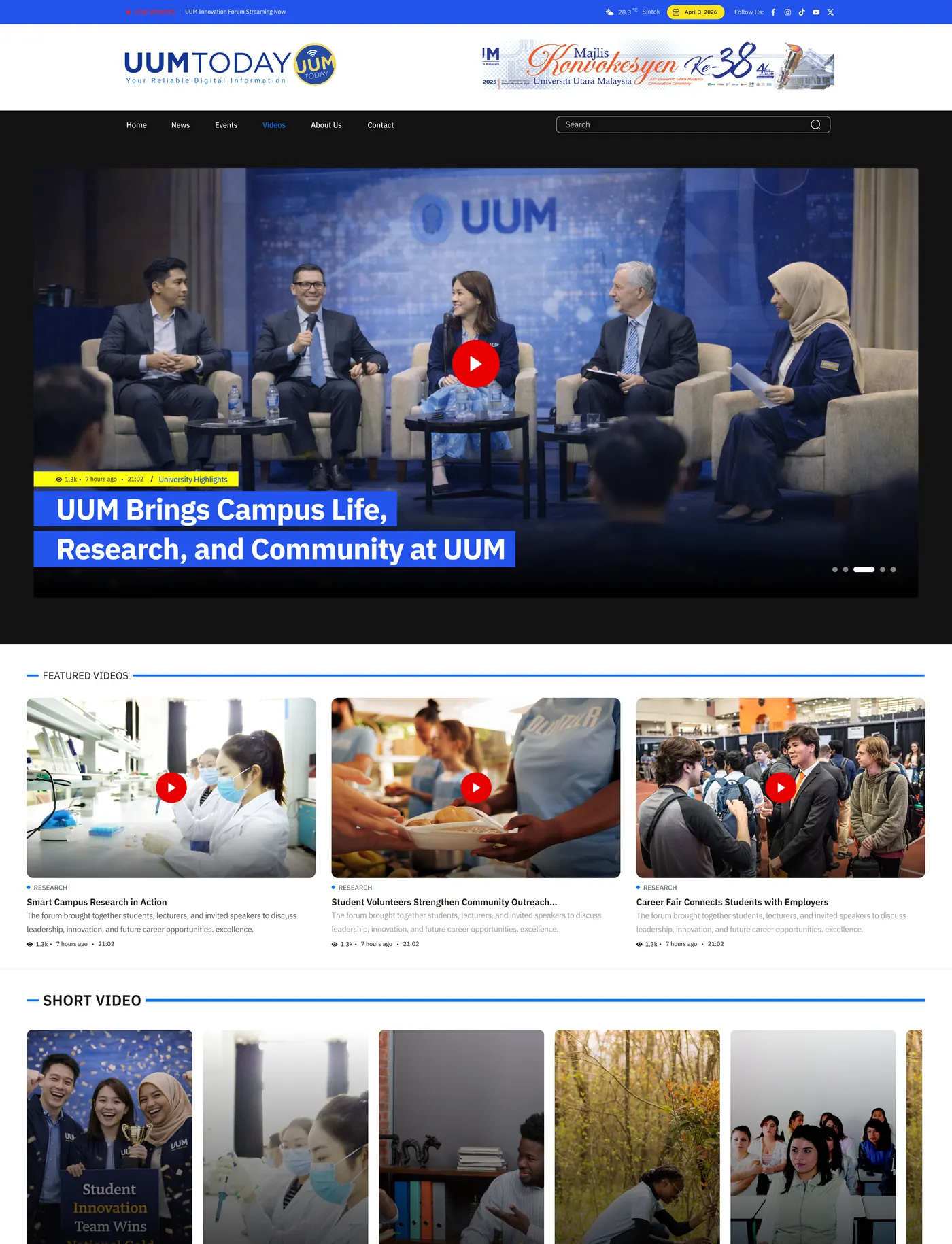
Live coverage by embedding, not rebuilding. Live event pages carry YouTube and Facebook streams rather than any attempt at video infrastructure. The university already streams to those platforms and the audience already watches there. What the portal adds is a page that gathers the stream, the announcements and the coverage in one place.
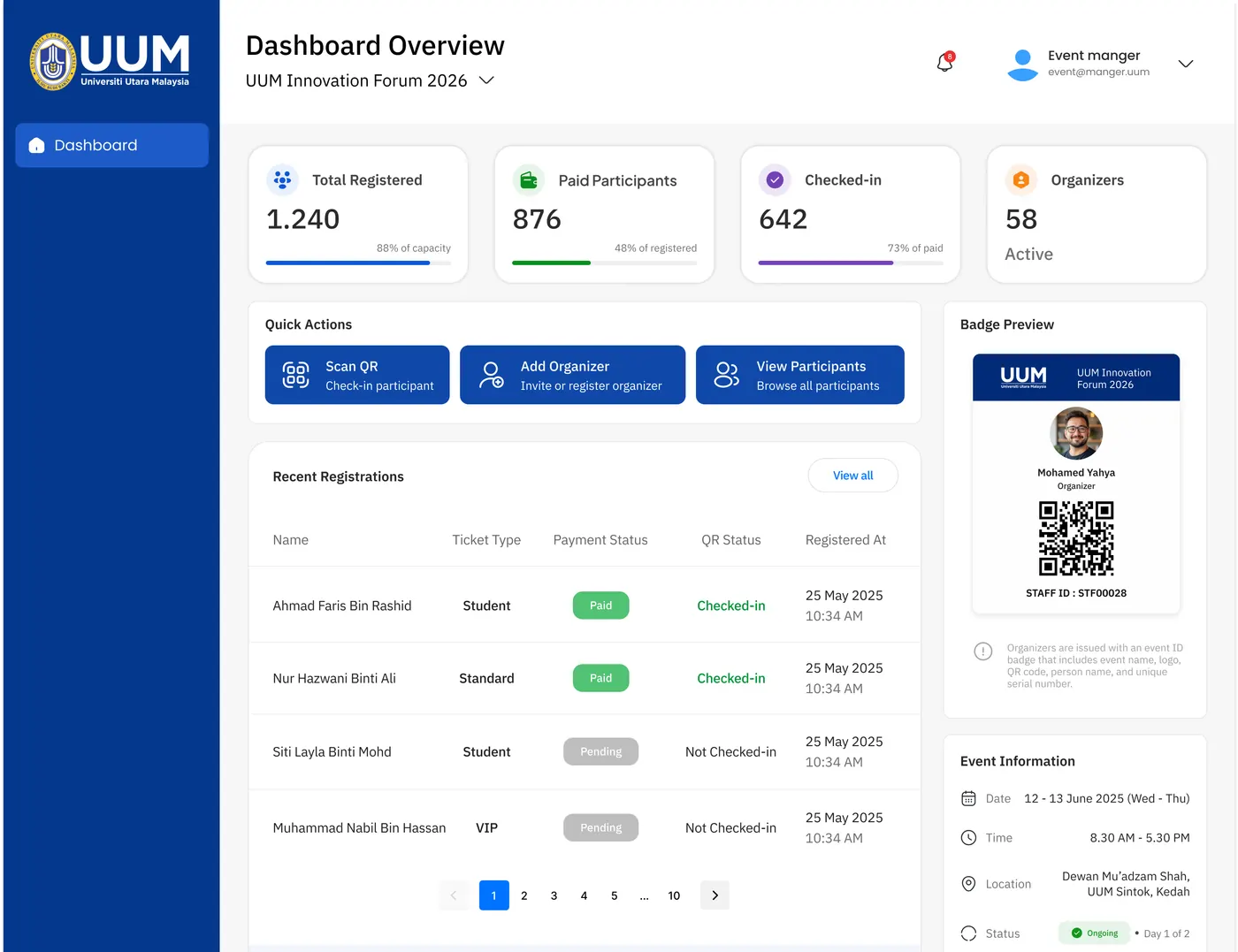
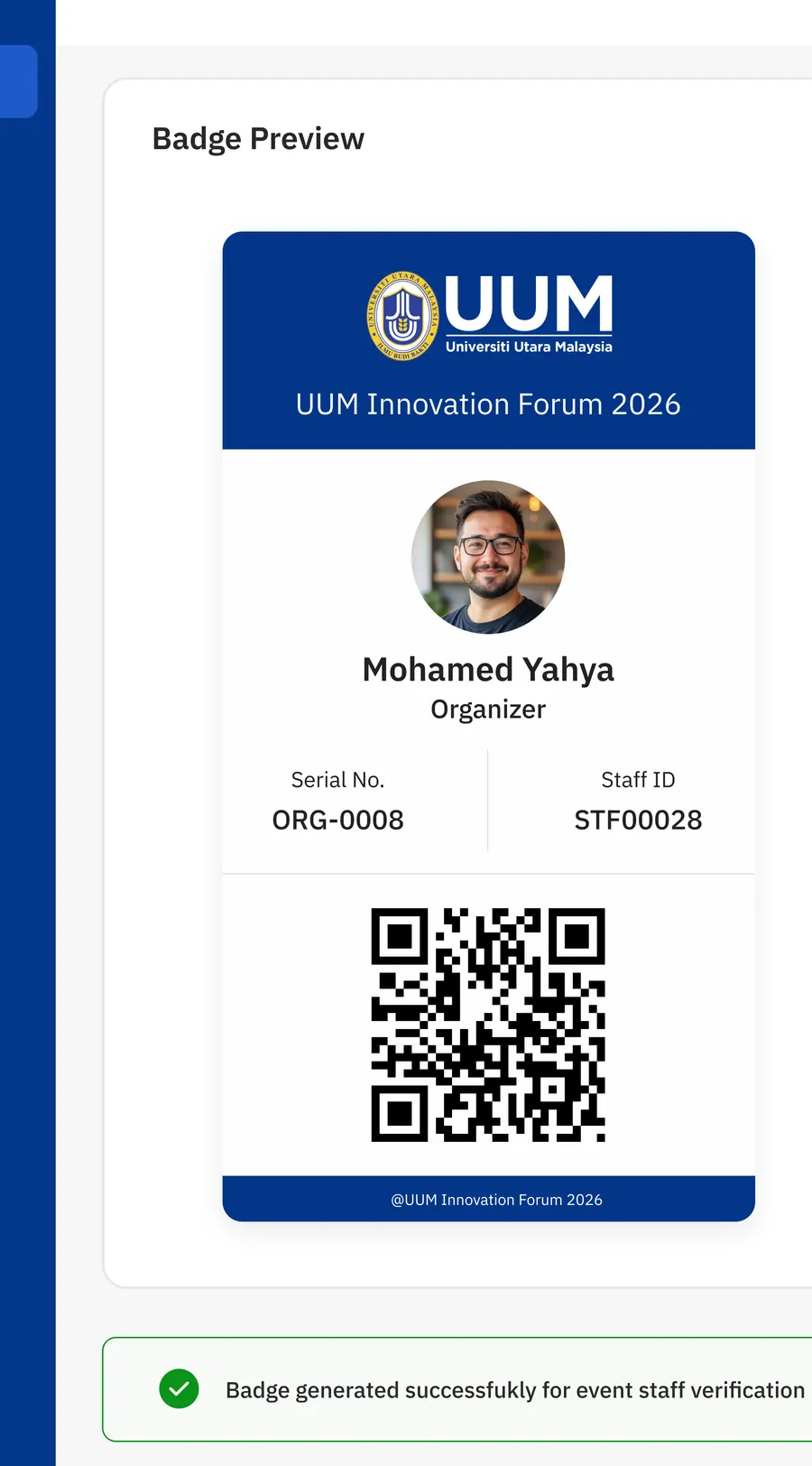
Events that close the loop. Listings take registrations, registration takes payment, and payment issues a badge with a serial number and a QR code. The event dashboard shows registered, paid and checked-in as three separate numbers, because the gap between them is the thing an organiser needs to watch in the last week.
Check-in as a scan. A badge is verified by scanning it. The dashboard carries a live check-in feed so the desk can see arrivals accumulating rather than trusting that the scan worked.
Decisions and trade-offs
Roles are fixed, not composable. Four named roles with fixed permissions rather than a permission matrix. A general system would handle the newsroom that reorganises itself; this one handles the newsroom that exists, and is comprehensible to the person administering it. If the editorial structure changes shape, this is the part that has to be rewritten.
Payment proof is reviewed by a person. Registration accepts an uploaded payment receipt which an organiser verifies, rather than an automated gateway reconciliation. That is slower and it puts a human in the loop on every paid registration. For an event with hundreds of participants and a bank transfer culture, it was the honest fit; for thousands, it would not scale and a gateway would have to replace it.
Comments, moderated. Reader comments are open but moderated, on a portal carrying a university's name. Pre-moderation would have been safer and would also have killed any conversation.
Result
Seven modules: a public portal with categories, highlights and a video archive; article management with drafts, scheduling, categories and an approval workflow; four roles with permission management; reader accounts, comments, sharing, newsletter and search; live pages carrying YouTube and Facebook streams alongside announcements; event listings with registration, payment and QR-based check-in; and an admin dashboard covering analytics, users, moderation, site settings, SEO and deployment.
The build
Want the detail behind any of this? Email me.